Edubrink
Stay updated on all things Edubrink by subscribing to us!
By subscribing you agree with our Privacy Policy and provide consent to receive updates.
Universities
Countries
Courses
Social Media
Pages
Copyright reserved@ 2023
Edubrink @ 2024
06 August 2025
📚 Study Dentistry in Azerbaijan 2026
A Strategic Guide to Azerbaijan Medical University, Global Accreditation (NMC/PMDC), and International Career Pathways for Aspiring Dentist

Introduction:
The global landscape of dental education is witnessing a significant reconfiguration. As traditional centers of academic excellence in North America and Western Europe become increasingly inaccessible due to exorbitant tuition fees and restrictive enrollment quotas, studying dentistry in Azerbaijan has emerged as a formidable alternative.
For international students, particularly from South Asia and the Middle East, Azerbaijan offers a unique combination of high-quality clinical training and internationally recognized qualifications. This report provides an exhaustive analysis of the dental education sector, focusing on Azerbaijan Medical University (AMU), regulatory compliance with the National Medical Commission (NMC) of India and the Pakistan Medical and Dental Council (PMDC), and the strategic career pathways available to graduates in the Gulf Cooperation Council (GCC) and the European Union.
Azerbaijan’s ascent as a hub for medical and dental studies is the result of a deliberate, multi-decade strategy to align its higher education system with the standards of the European Higher Education Area through the Bologna Process. Following its independence, the nation transitioned from a Soviet-legacy model to a modern, credit-based system that facilitates degree mobility and international accreditation.
For the international student, this represents a unique intersection of Eastern European clinical rigor and Western educational frameworks. The appeal of Azerbaijan is anchored in its commitment to providing a safe, multicultural environment for English-speaking students, particularly those from Pakistan and India who are concerned about safety, cultural compatibility, and financial feasibility.
Unlike many Western destinations, Azerbaijan maintains a visa approval ratio of approximately 95% for students, provided that documentation is authentic and the admission interview is successfully completed. This accessibility, combined with the absence of stringent bank statement requirements in many cases, positions Azerbaijan as a pragmatically superior choice for high-intent students.
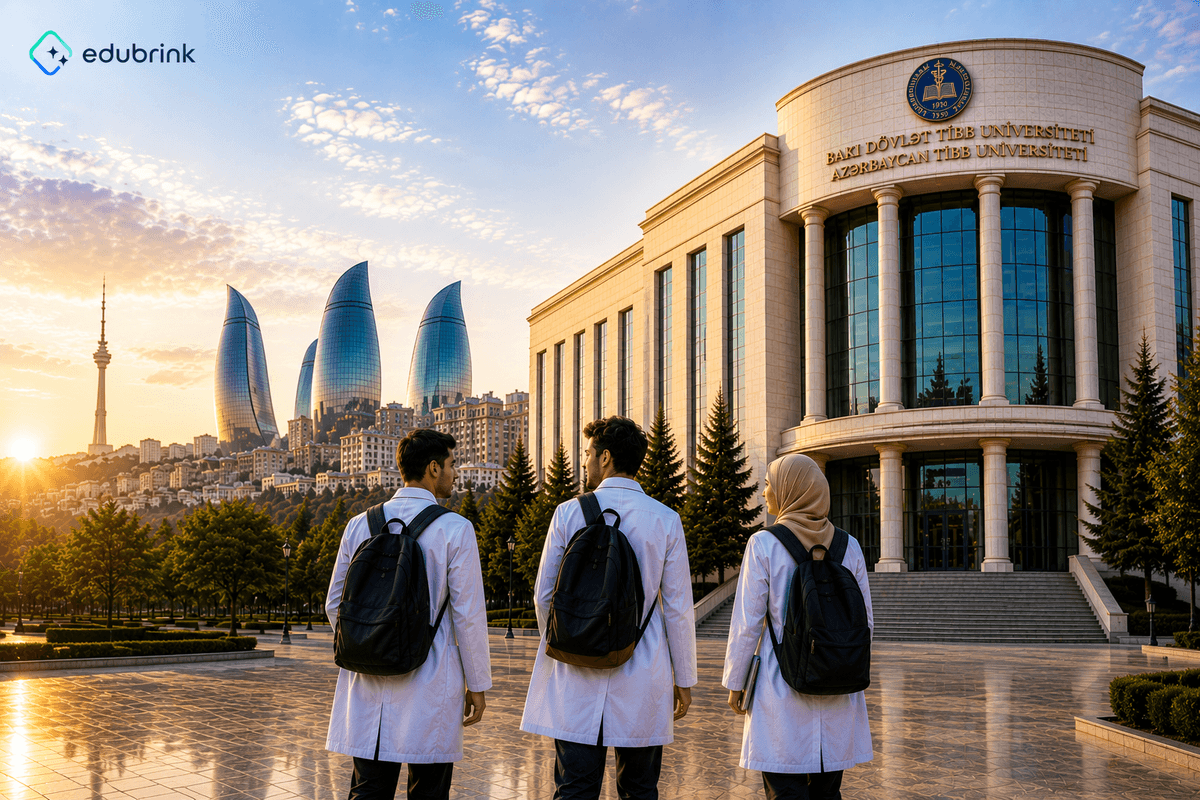
Azerbaijan Medical University (AMU) is the cornerstone of the nation’s medical education infrastructure. Established in 1930, the university has nearly a century of history in training medical professionals and stands as the only specialized government institution for medicine in the country. AMU is not merely a teaching college; it is a comprehensive scientific center that integrates education, research, and clinical practice across its 74 academic departments.
The university’s faculty is characterized by exceptional academic density, comprising over 1,000 members, including:
184 Doctors of Sciences
993 PhDs
This depth of expertise ensures that the dental curriculum is informed by active research and the latest advancements in oral health. AMU’s membership in the Trans-European cooperation (TEMPUS) program further underscores its commitment to maintaining parity with European standards of medical training.
The Faculty of Dentistry at AMU, organized in 1954, has a specialized focus on the training of professional dental surgeons. The faculty currently hosts over 800 students, with a significant proportion—approximately 38%—being international students from countries such as Turkey, Iran, Pakistan, and various Arab nations. This international presence creates a diverse peer-learning environment where students share global perspectives on healthcare delivery.
| Academic Resource | Capacity/Details |
| Total Student Enrollment | 8,000 - 8,999 |
| Academic Staff Count | 1,000 - 1,499 |
| Specialized Clinics | 4 (Dental, Oncology, Therapeutic, Surgical) |
| Number of Departments | 74 |
| Faculty of Dentistry Organized | 1954 |
The Bachelor of Dental Surgery (BDS) or Doctor of Dental Medicine (DMD) equivalent program in Azerbaijan is designed as a five-year academic and clinical journey. The program is specifically structured to transition students from theoretical biological sciences to complex clinical interventions.
The first two years are dedicated to building a foundational understanding of the human body and the biological principles of health. Students engage in intensive coursework in subjects such as Human Anatomy, Histology, Biochemistry, and Medical Physics. A critical component of this phase is the study of Dental Anatomy and Occlusion, which provides the morphological basis for all future clinical work.
During this period, the pedagogical approach is traditionally lecture-based, but there is an increasing integration of Problem-Based Learning (PBL) strategies. Research within Azerbaijani universities has indicated that PBL interventions can lead to a 12% improvement in critical thinking scores among students, prompting a gradual shift toward more interactive, student-centered tutorials.
The clinical phase marks the transition to patient-facing education. From the third year, students begin working in phantom laboratories and participating in clinical correlations. The fourth and fifth years are primarily spent in the Educational-Dental Clinic, where students perform procedures under the strict supervision of faculty specialists.
The curriculum covers the full spectrum of modern dentistry:
Therapeutic Dentistry: Conservative management of dental caries and endodontic treatments.
Orthopedic Stomatology: Focusing on prosthetic rehabilitation and the restoration of dental function.
Oral and Maxillofacial Surgery: Training in surgical interventions, including tooth extractions and management of facial trauma.
Pediatric Dentistry: Specialization in the oral health needs of children and preventive care.
Periodontology and Implantology: Advanced study of supporting structures and modern replacement techniques.
Azerbaijan utilizes the European Credit Transfer and Accumulation System (ECTS), ensuring that each module is measured by a standardized workload. A typical semester involves approximately 30 ECTS credits, with assessment methods including computer-based examinations, practical skills tests, and oral colloquiums. For example, the Pathological Anatomy module in the third year carries 3 ECTS credits and requires students to demonstrate proficiency in identifying morphofunctional signs of cell death and tumor formation.
| Year | Primary Academic Focus | Clinical Exposure Level |
| Year 1 | Basic Sciences (Anatomy, Chemistry, Physics) | Observation & Simulation |
| Year 2 | Bio-Biological Sciences & Pre-Clinical Lab | Phantom Head Simulation |
| Year 3 | Pathophysiology & General Medicine | Clinical Correlation & Assistantship |
| Year 4 | Specialized Dental Disciplines | Direct Patient Care (Supervised) |
| Year 5 | Advanced Clinical Practice & Internship | Comprehensive Clinical Management |
The quality of dental training in Azerbaijan is underscored by the state-of-the-art facilities available at AMU. The Educational-Dental Clinic, established in 2002, serves as the primary training ground for residents and senior students. The clinic is equipped with modern diagnostic imaging, CAD/CAM technology, and specialized departments for all major dental branches.
Before engaging in patient care, students must demonstrate manual dexterity in phantom-head laboratories. These labs feature 13 specialized workplaces where students practice high-speed and low-speed handpiece operation, pulp canal therapy simulation, and cavity preparation on synthetic models. This bridge between theory and practice is essential for developing the gross and fine motor skills required of a dental surgeon.
The clinical training in Azerbaijan is increasingly incorporating digital dentistry. Students are exposed to:
Laser Dentistry: For minimally invasive soft tissue procedures.
Digital Impressions and 3D Printing: Modernizing the workflow for prosthetic and orthodontic treatments.
Teledentistry and Digital Imaging: Enhancing diagnostic capabilities and patient communication.
This exposure to high-technology dental environments ensures that graduates are not only clinically competent but also proficient in the digital tools that define contemporary practice in the UAE, UK, and USA.
For international students, the economic feasibility of studying in Azerbaijan is a decisive factor. The country offers a high-value education at a fraction of the cost found in traditional European or Middle Eastern hubs.
The tuition structure in Azerbaijan is transparent, though students must account for the preparatory year if they do not meet initial language or academic thresholds.
| Program Phase | Annual Tuition (USD) | Duration |
| Preparatory Language/Science Year | $5,000 | 9 Months |
| Bachelor of Dental Surgery (English Medium) | $6,000 | 5 Years |
| Master of Dental Surgery / Residency | $9,000 | 3 Years |
| PhD Programs | $7,000 | 3 Years |
Note: Some institutions like Nakhchivan State University offer programs starting as low as $3,000 per year, though AMU remains the most recognized for international clinical standards.
Living in Baku, the capital and main educational center, provides a balance of modern amenities and affordable costs.
| Expense Category | Monthly Estimate (USD) | Annual Estimate (USD) |
| University Dormitory | $75 - $85 | $882 - $1,020 |
| Private Shared Apartment | $250 - $550 | $3,000 - $6,600 |
| Food and Groceries | $150 - $250 | $1,800 - $3,000 |
| Transportation and Internet | $50 - $100 | $600 - $1,200 |
| Personal & Miscellaneous | $80 - $150 | $1,000 - $2,000 |
| Total Estimated Cost | $605 - $1,135 | $7,282 - $13,820 |
The affordability of living in Azerbaijan is a significant driver for students from Pakistan and India, where the cost of private dental education can be several times higher without providing the same level of international recognition or safety.
The admission process for Azerbaijani universities is merit-based and relatively streamlined compared to the centralized entrance exams of South Asian nations.
For the 2025–2026 intake, international students must meet the following general eligibility criteria:
High School Qualifications: Completion of secondary education (HSSC/Grade 12) with a minimum of 50–60% aggregate in Physics, Chemistry, and Biology (PCB).
NEET/MDCAT Requirements: For Indian students, qualifying the NEET exam is mandatory for future recognition by the NMC. Pakistani students applying through official channels should possess a valid MDCAT score (minimum 50%) for PMDC eligibility.
Language Proficiency: Instruction is available in English, Russian, and Azerbaijani. For the English-medium track, students must provide proof of proficiency (IELTS 5.5+ or TOEFL 80+) or complete the university’s preparatory year.
Interview: AMU conducts an online interview via Skype or Google Meet to assess the applicant’s academic intent and language skills.
The 95% visa success rate in Azerbaijan is contingent upon the submission of accurate documentation.
Initial Application: Scan of 10th and 12th-grade mark sheets, passport, and NEET/MDCAT scores.
University Acceptance: Following the interview, the university issues an official acceptance letter.
Visa Application: Students submit the acceptance letter, medical certificates (including HIV and hepatitis tests), and proof of tuition payment to the embassy or via the e-visa portal.
Residency: Upon arrival, students must register with the State Migration Service within 15 days to obtain their temporary residence permit (TRP), which is renewable annually.
The primary concern for any international student is whether their degree will allow them to practice in their home country or in lucrative international markets. Azerbaijani dental degrees are widely recognized, provided students adhere to specific regulatory pathways.
Azerbaijan Medical University is listed in the World Directory of Medical Schools (WDOMS) and recognized by the World Health Organization (WHO). This is the baseline requirement for any international medical qualification. Furthermore, the accreditation of Azerbaijani institutions often falls under agencies recognized by the World Federation for Medical Education (WFME), which is critical for future practice in the USA or Canada.
Indian students must ensure their education aligns with the Foreign Medical Graduate Licentiate (FMGL) Regulations 2021. To be eligible for the FMGE/NExT exam in India, the program must satisfy:
Duration: At least 54 months of academic study plus a 12-month internship completed at the same institution.
Medium: 100% English-medium instruction throughout the course.
Licensure: The degree must grant the graduate the right to practice as a dentist in the country where it was awarded (Azerbaijan).
Graduates from recognized Azerbaijani universities are eligible for provisional registration in Pakistan.
Recognized Institutions: Universities like AMU and Nakhchivan State University are typically on the PMDC’s recognized list.
Licensing Exams: Graduates must pass the National Registration Examination (NRE) or National Examination Board (NEB) tests to gain full licensure and practice as dentists in Pakistan.
The Gulf region remains the most popular destination for Azerbaijani graduates due to its proximity and high compensation levels. To work in the UAE or Saudi Arabia, dentists must navigate the Prometric licensing system.
| Licensing Body | Jurisdiction | Basic Requirements for General Dentists |
| DHA | Dubai | BDS/DMD + 1-year Internship + 2 years Clinical Experience |
| DOH/HAAD | Abu Dhabi | BDS/DMD + 1-year Internship + 2 years Clinical Experience |
| MOH | Northern Emirates | BDS/DMD + 1-year Internship + 2 years Clinical Experience |
| SCFHS | Saudi Arabia | BDS/DMD + Internship + PSV Verification (DataFlow) |
Key Insight: The DHA Prometric exam for dentists consists of 150 MCQs with a pass threshold of 60%. It covers areas such as Endodontics (23%), Oral Surgery (41%), and Restorative Dentistry (36%).
Graduates seeking to practice in the UK must appear for the Overseas Registration Exam (ORE) or the License in Dental Surgery (LDS) conducted by the General Dental Council (GDC). While Azerbaijan is not part of the EEA automatic recognition scheme (Directive 2005/36/EC), its ECTS-aligned curriculum provides a strong foundation for passing these rigorous examinations.
Post-graduation, the journey in Azerbaijan often continues into specialized residency or master’s programs (MDS). Azerbaijan Medical University offers three-year residency programs in various branches of dentistry.
Research into dental students’ career preferences reveals that a majority (51%) intend to pursue specialization.
| Specialization | Student Preference % | Career Outlook |
| Orthodontics | 33% | High demand in private cosmetic practice |
| Endodontics | 28% | Critical for hospital-based restorative care |
| Oral Surgery | 16% | High-earning potential in surgical centers |
| Periodontology | 12% | Growing field with focus on implantology |
The financial return on an Azerbaijani dental degree varies significantly by location and specialization.
In Azerbaijan: General practitioners earn between $10,000 and $30,000 annually, while specialists can exceed this depending on their private practice success.
In the UAE/Gulf: Starting salaries for general dentists range from $40,000 to $60,000, while specialists with a few years of experience can earn between $80,000 and $120,000 annually.
In India: Upon clearing the FMGE, starting salaries for general dentists are approximately INR 6–10 lakhs per year.
Beyond academics, the lived experience of an international student in Azerbaijan is characterized by security and cultural richness.
Azerbaijan is consistently ranked as one of the safest countries in the region, particularly for women. The capital, Baku, is a modern metropolis with an urban campus that offers a blend of historical architecture and 21st-century infrastructure. For Pakistani and Indian students, the availability of Halal food and a familiar cultural emphasis on family and hospitality eases the integration process.
AMU provides six dedicated hostels, two of which are specifically reserved for international students. These dormitories feature:
Study rooms and libraries for quiet academic work.
Common lounges with satellite television.
Sports facilities, including swimming pools and gymnasiums.
24/7 security and administrative support.
International students are allowed to work during their studies, typically up to 30–40 hours per week, provided they obtain the necessary work permit. While the dental curriculum is demanding, many students find part-time opportunities in tutoring, translation, or retail to support their living expenses.
Navigating the complexities of international dental education requires access to transparent, unbiased data. Edubrink positions itself as a digital education strategist, not a recruitment agency. The platform provides students with the critical information needed to evaluate universities based on clinical patient flow, faculty credentials, and regulatory compliance.
Edubrink assists students by:
Clarifying Regulatory Frameworks: We translate complex NMC and PMDC rules into actionable checklists for students to ensure their degrees remain valid for practice.
Analyzing Hidden Costs: By providing detailed breakdowns of living expenses and preparatory year fees, we prevent the "agent-driven" trap of unexpected financial burdens.
Facilitating Peer Insights: Through our network, students can gain a realistic understanding of the clinical training intensity and the student-teacher ratio at AMU.
Mapping Career Paths: We provide guidance on the DataFlow and Prometric systems for students aiming for the Gulf or European markets.
As we look toward 2026 and beyond, the value of a dental degree from Azerbaijan Medical University is expected to grow. The nation’s continued integration into European educational standards and its strategic position in the global "Silk Road" of healthcare tourism make it a prime location for medical training.
Graduates from Azerbaijan are uniquely positioned: they possess the clinical toughness forged in the high-volume hospitals of Baku and the academic fluency required by the world’s most demanding licensing bodies. For the aspiring dentist, Azerbaijan offers more than just a degree; it offers a globally competitive foundation for a lifetime of professional success in one of the most critical fields of healthcare.
To provide prospective students with a granular view of the academic expectations, the following table details specific course modules and their clinical relevance as taught in the Azerbaijani system.
| Subject Area | Specific Modules | Practical Skills Acquired |
| Maxillofacial Region | Oral Anatomy, Morphofunctional Terminology | Identification of head/neck muscle topography |
| Pathological Sciences | Degeneration, Cell Death, Inflammation | Differential diagnosis of jaw cysts and tumors |
| Clinical Medicine | Internal Medicine, General Surgery | Basic Life Support (BLS) and orofacial correlation |
| Dental Technology | Prosthodontics, Dental Materials | Casting, impression taking, and CAD/CAM usage |
| Diagnostic Sciences | Oral Radiology, Roentgenology | X-ray interpretation and 3D imaging analysis |
This structured curriculum ensures that by the time students reach their final year, they have achieved the 151 detailed outcomes required by European standards for dental practitioners, spanning the domains of clinical expertise, professionalism, and leadership.
The decision to study dentistry in Azerbaijan is supported by a robust framework of academic history, clinical infrastructure, and global recognition. For students from India and Pakistan, AMU offers a bridge to a professional career that is both financially accessible and qualitatively superior to many domestic alternatives.
Verify Recognition: Ensure the university is listed on the WHO/WDOMS and is recognized by the PMDC or NMC at the time of application.
NEET/MDCAT Readiness: Secure the necessary qualifying scores before moving abroad to avoid future licensing hurdles in India or Pakistan.
Financial Planning: Budget for a minimum of $6,000 in tuition and an additional $8,000–$10,000 for living expenses annually.
Language Strategy: If English-medium proficiency is not certified, prioritize the preparatory year to ensure clinical success.
Focus on Clinicals: Utilize the university’s specialized clinics to the fullest, as the 12-month mandatory internship is the cornerstone of international licensing.
Azerbaijan represents a strategic choice for the modern medical student—a location where heritage meets innovation, and where an affordable education does not come at the cost of clinical excellence. By following the structured pathways outlined in this report, international students can secure a future as highly skilled dental surgeons on the global stage.
FAQ
Find courses to study in all destinations