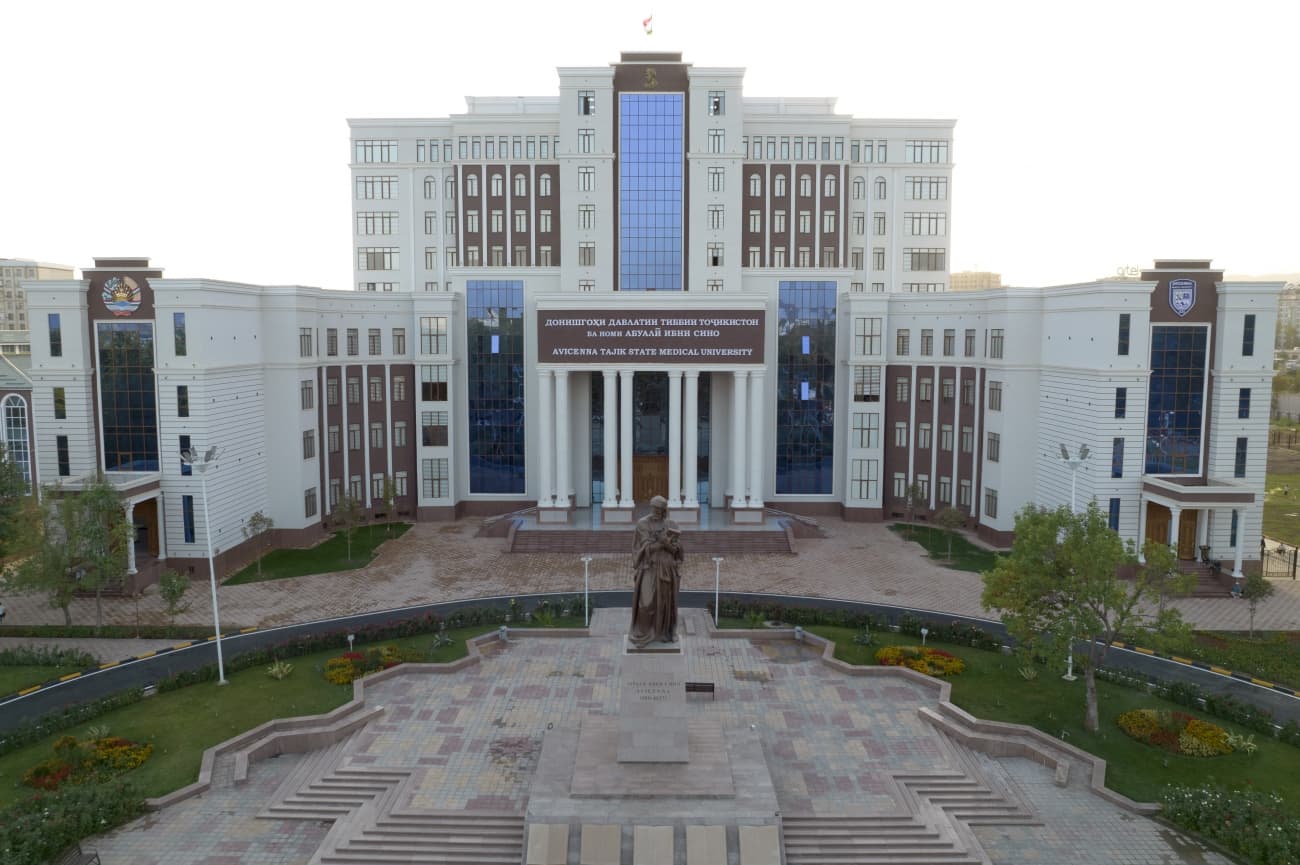
Avicenna Tajik State Medical University
Tajikistan
Overview
The globalization of medical education has fundamentally altered the migratory patterns of aspiring physicians, particularly within the Indian context where domestic seat scarcity and escalating private sector costs have necessitated a search for high-value alternatives. Central Asia has emerged as a critical geography in this transition, with the Republic of Tajikistan positioning itself as a hub for rigorous, state funded medical training.
At the epicenter of this educational landscape is Avicenna Tajik State Medical University (ATSMU), an institution that bridges Soviet-era academic discipline with modern, globally aligned healthcare standards. For the 2026 academic session, pursuing an MBBS in Tajikistan at ATSMU represents a pivotal choice for international students, provided the institution is evaluated through a lens of transparency, regulatory compliance, and long-term career ROI. This report serves as a comprehensive institutional dossier, analyzing the university’s multifaceted infrastructure, academic alignment with the National Medical Commission (NMC) 2021/2026 regulations, and the socio-economic realities of medical training in Dushanbe.
The historical trajectory of Avicenna Tajik State Medical University is emblematic of the broader development of healthcare in Central Asia. Established in 1939 as the Stalinabad Medical Institute, the university was born out of a strategic necessity to create a self-sustaining healthcare workforce in the region.
During its early decades, specifically between 1945 and 1959, the institute underwent a rapid expansion of its clinical departments, establishing specialized faculties in therapy, surgery, obstetrics, and gynecology. In 1992, following Tajikistan’s independence, the institution was elevated to university status and renamed in honor of Abu Ali Ibn Sina (Avicenna), whose contributions to medicine remain a point of civilizational pride for the Tajik people.
By 2010, the university recognized the growing demand for English-medium medical education and launched its specialized MBBS program for international students. This program was not merely a linguistic translation of the local curriculum but a structural realignment intended to meet the standards of the World Health Organization (WHO) and the Foundation for Advancement of International Medical Education and Research (FAIMER). The evolution from a regional medical school to an international university is supported by a faculty of over 276 experienced academic mentors and 62-63 specialized departments, ensuring a depth of expertise across the medical spectrum.
| Historical Milestone | Year | Significance |
| Founding | 1939 | Established as Stalinabad Medical Institute to train regional healthcare workers. |
| Departmental Expansion | 1945 | Allocation of leading disciplines: surgery, therapy, and obstetrics. |
| Renaming | 1950s | Renamed as Avicenna Tajik State Medical Institute. |
| University Status | 1992 | Elevation to Tajik State Medical University under the name of Avicenna. |
| International Launch | 2010 | Commencement of the 5-year/6-year English-medium MBBS program for foreign students. |
For the contemporary medical student, institutional prestige is secondary to regulatory validity. A degree from ATSMU is a functional asset only if it facilitates licensure in the student’s home country and globally. The university has proactively sought inclusions and accreditations that satisfy these requirements for MBBS abroad in Tajikistan.
ATSMU is prominently listed in the World Directory of Medical Schools (WDOMS), a mission-critical listing developed through the partnership between the World Federation for Medical Education (WFME) and FAIMER. This inclusion is the foundational requirement for graduates to apply for the Educational Commission for Foreign Medical Graduates (ECFMG) certification, which in turn grants eligibility for the United States Medical Licensing Examination (USMLE). Furthermore, the university's curriculum is aligned with WFME standards, a benchmark that signifies the global comparability of its medical training.
The National Medical Commission’s Foreign Medical Graduate Licentiate (FMGL) Regulations of 18th November 2021 introduced a paradigm shift in how foreign degrees are recognized in India. ATSMU is one of the premier NMC approved medical universities in Tajikistan, having structured its 2026 intake to ensure absolute adherence to these mandates:
Course Duration: The regulations mandate a minimum of 54 months of theoretical and practical study. ATSMU’s program extends to 6 years (72 months), comfortably exceeding this threshold.
Mandatory Internship: A continuous 12-month internship must be completed in the same foreign medical institution where the degree was obtained. ATSMU integrates this internship into its final year, utilizing its network of affiliated state hospitals.
Medium of Instruction: 100% English-medium instruction is a non-negotiable requirement. ATSMU provides this for all international cohorts, ensuring that technical medical terminology is consistent with global and Indian standards.
Registration in Country of Study: The degree must grant the holder eligibility to practice medicine in the awarding country. ATSMU graduates are eligible for registration as general practitioners in Tajikistan upon completion of their clinical house job.
| Recognition Body | Type of Accreditation | Benefit to Indian Students |
| NMC (India) | FMGL 2021 Compliant | Eligibility for the NExT/FMGE licensing exams. |
| WHO | World Directory Listed | Degree recognized globally for further studies and practice. |
| ECFMG (USA) | Certified | Eligibility for USMLE and residency programs in the United States. |
| GMC (UK) | Recognized | Eligibility for PLAB/UKMLA and practice in the United Kingdom. |
| IAAR / NAAR | Programmatic Accreditation | Validated academic quality and institutional infrastructure until 2030. |
The pedagogical structure at ATSMU is designed to facilitate a logical transition from basic biological sciences to complex clinical reasoning. The curriculum follows a 5+1 year format, where the final year is exclusively dedicated to a clinical internship.
The initial phase of the MBBS program focuses on the "foundation subjects" that form the bedrock of medical knowledge. During the first year, students engage in rigorous study of Human Anatomy, Medical Biology, and Biochemistry. The use of real cadavers for dissection from the first year is a significant advantage, providing a tactile understanding of human structure that is often superior to the digital simulations used in some private institutions.
By the second and third years, the focus shifts to Pathological Physiology, Microbiology, and Pharmacology. It is during this period that the university introduces 100% English-medium instruction in para-clinical subjects, aligning with the NMC requirement to cover 19 mandatory subjects including Forensic Medicine and Community Medicine.
The fourth and fifth years are characterized by an intensive immersion in clinical environments. Students rotate through departments such as Pediatrics, Internal Diseases, General Surgery, and Obstetrics and Gynecology. A critical component of the ATSMU experience is the early clinical exposure starting from the third year, where students begin hospital rounds and patient case presentations.
| Academic Year | Core Curriculum Focus | Clinical Posting Focus |
| Year 1 | Anatomy, Biochemistry, Physiology, Latin. | Basic Nursing and Patient Care. |
| Year 2 | Histology, Microbiology, Immunology, Medical Genetics. | Introduction to Clinical Examination. |
| Year 3 | Pharmacology, Pathology, General Surgery, Hygiene. | Wards and Out-Patient Department (OPD) Exposure. |
| Year 4 | Pediatrics, OBGYN, ENT, Ophthalmology, Radiology. | Specialized Clinical Postings. |
| Year 5 | Neurology, Psychiatry, Oncology, Infectious Diseases. | Advanced Surgery and Emergency Medicine. |
| Year 6 | Mandatory 12-Month Continuous Internship. | Full-Time Hospital-Based Training. |
The sixth year at ATSMU is not merely an auxiliary phase but a core academic requirement. Following the completion of theoretical exams at the end of the fifth year, students enter a 12-month rotating internship. This internship is supervised by senior doctors at affiliated institutions such as the Ibn Sina Clinic and the Republican Clinical Hospital. Students must document their daily clinical duties and have their internship certificate attested by the Tajik medical authorities and the Indian Embassy to ensure validity under the NMC Rules 2026.
A medical university in Dushanbe's strength is inherently tied to its clinical facilities. ATSMU is situated in the capital city, which serves as the primary healthcare hub for the nation. This provides students with access to a high volume of patients presenting with a diverse array of pathologies.
The university leverages several key institutions for clinical training:
Ibn Sina Clinic: A state-of-the-art diagnostic and treatment center that allows students to observe modern medical technology in practice.
Republican Clinical Hospital: The largest multi-profile medical facility in Tajikistan, providing exposure to large-scale inpatient management.
Practical Skills Training Center: This center is equipped with simulation labs that allow students to practice procedures—such as cannulation, suturing, and basic life support—before they engage in real-world clinical practice.
Specialized Centers: Affiliations with centers for Oncology, Cardiology, and the Republican Children’s Hospital ensure that students gain competence in sub-specialties required by the FMGE/NExT syllabus.
For many Indian families, the decision to study medicine in Tajikistan at ATSMU is driven by fiscal pragmatism. The university offers a government-subsidized fee structure that is significantly lower than private medical colleges in India.
The following table outlines the Avicenna Tajik State Medical University fees for the 2026 academic cycle.
| Particulars | Year 1 (USD) | Year 2-6 (USD) |
| Tuition Fee | $4,500 - $5,500 | $4,500 - $5,500 |
| Hostel Fee | $600 - $1,000 | $600 - $800 |
| Medical Insurance | $200 | $200 |
| Visa/Registration | $350 | $150 |
| Administrative / One-Time | $1,700 | N/A |
| Annual Estimate | $7,350 - $8,750 | $5,450 - $6,650 |
Note: The one-time "Management & Admission" charge of approximately $1,700 often covers initial registration, nostrification, and administrative overheads. The total course cost for 6 years typically aggregates between ₹28 lakhs to ₹34 lakhs depending on currency fluctuations.
When considering the Tajikistan medical university cost, students should account for:
Nostrification Charges: Approximately $100 for the first-time legalization of 10th and 12th-grade certificates.
Graduation and Diploma Fees: A one-time fee of $200 - $300 in the final year.
Clinical Placement Surcharges: Some specialized rotations in private or high-demand clinics may incur additional training fees of $500 - $1,000.
Licensing Exam Coaching: While not mandatory, many students opt for FMGE/NExT coaching, which can cost approximately $1,000.
To provide a student-centric decision-making framework, ATSMU must be compared against its regional and international peers.
KSMU has recently gained traction due to its collaborative model with Indian institutions. While ATSMU is the "prestige" choice with the longest history, KSMU offers some unique advantages.
| Feature | Avicenna Tajik State Medical University (ATSMU) | Khatlon State Medical University (KSMU) |
| University Type | State/Government. | State/Government with Indian Collaboration. |
| Location | Dushanbe (Capital). | Dangara/Bokhtar. |
| Faculty Profile | Experienced Local Professors. | Indian Faculty and Visiting Professors. |
| FMGE Focus | Integrated into Curriculum. | Dedicated Coaching from Day One. |
| Total Fees (6 Years) | Approx. ₹30 - 34 Lakhs. | Approx. ₹34.9 Lakhs (All-Inclusive). |
| Metric | Tajikistan (ATSMU) | Russia (e.g., Mari State) | Kazakhstan (e.g., Al-Farabi) |
| Tuition Range (Annual) | $3,500 - $5,500. | $4,000 - $6,000. | $3,000 - $5,000. |
| Living Cost (Monthly) | $150 - $250. | $200 - $350. | $200 - $300. |
| Medium of Instruction | 100% English (NMC Compliant). | Bilingual options common. | Mostly English-medium. |
| Weather | Moderate Winters. | Extreme Cold. | Cold but Manageable. |
Dushanbe, the capital of Tajikistan, offers a safe and increasingly modern environment for MBBS in Tajikistan for international students. The city is characterized by low crime rates and a friendly local population.
Hostel facilities at Avicenna Tajik State Medical University are generally mandatory for international students in their first year.
Configuration: Rooms are typically shared by 2–4 students, furnished with beds, study desks, and wardrobes.
Hostel Types: Different clusters (North and South) offer varying prices based on renovation levels.
Security: Hostels are equipped with 24/7 security and warden services.
To support nutrition, ATSMU hosts Indian mess facilities. These provide both vegetarian and non-vegetarian options, often employing Indian cooks to maintain authenticity.
| Expense Category | Monthly Cost (USD) | Monthly Cost (INR Approx.) |
| Mess/Food | $100 - $150 | ₹8,300 - ₹12,500. |
| Local Transport | $15 - $30 | ₹1,200 - ₹2,500. |
| Personal Laundry/Misc | $20 - $40 | ₹1,700 - ₹3,300. |
| Utilities/Internet | $30 - $50 | ₹2,500 - ₹4,100. |
| Total Monthly Budget | $165 - $270 | ₹13,700 - ₹22,400 |
The Avicenna Tajik State Medical University admission 2026 is expected to be highly competitive. Students must adopt a proactive strategy to secure a seat.
Application Window: July 1st to late August.
Interview Dates: Late July and August.
Visa Processing: 4–6 weeks prior to departure.
Reporting to Campus: First week of September.
Apostille: 10th and 12th mark sheets must be apostilled by the Ministry of External Affairs (MEA), New Delhi.
Medical Health Clearances: HIV and general medical fitness reports must be issued by authorized hospitals.
Financial Proof: Evidence of the sponsor's financial status and a "No Objection Certificate" (NOC) are required for visa issuance.
While some platforms claim an "85% FMGE passing rate" for Tajikistan, National Board of Examinations (NBE) data for 2024-2025 suggests an average pass rate in the mid-to-high 20% range for Tajikistan-based universities. However, ATSMU’s status as a government university generally translates to a better-prepared candidate pool.
The NMC is replacing the FMGE with the NExT exam. ATSMU’s curriculum, which emphasizes clinical rotations and problem-based learning from the third year, is well-suited for the NExT format.
Graduates can prepare for:
USMLE (USA): For residency and specialization in the United States.
PLAB/UKMLA (UK): For registration with the GMC in Britain.
German Medical Licensure: Many graduates pursue PG in Germany due to the globally valid nature of the ATSMU MD degree.
While the medium of instruction is 100% English, the "language of the hospital" is Tajik or Russian. Students are taught these languages from the first year to ensure success in clinical postings during Years 4–6.
Tajikistan is frequently cited as one of the safer Central Asian nations. However, specific operational risks include:
Terrorism and Civil Unrest: Advisories recommend caution near the Afghan border (within 10km).
Infrastructure Risks: Power outages can occur in winter.
Regulatory Registration: Students must register with the Department of Visas and Registration (OVIR) within 10 working days of arrival.
Avicenna Tajik State Medical University remains a benchmark for affordable, high-quality medical education in Central Asia. Its 2026 offering is particularly strong because it aligns with the strict NMC 54+12 month rule.
Regulatory Gold Standard: One of the few institutions with a 12-month internship unequivocally integrated into the 6-year program.
Fiscal Efficiency: Total costs under ₹35 lakhs provide high ROI compared to Indian private colleges.
Clinical Depth: Focus on early clinical exposure and real cadavers ensures practical competency.
Institutional Stability: A state-owned university founded in 1939 with a long history of academic excellence.
Featured Programs
No Courses Found
No Courses Available
Highlight
Campus
Main Campus
DushanbeAvicenna Tajik State Medical University is located in Dushanbe, the capital of Tajikistan, at 139 Ru...
FAQ
Our Study Abroad FAQ covers everything you need to know—from choosing the right destination and applying to universities, to visa requirements.
Not available
Awaiting official update
Not Available
Scholarship Available
Mar 2026
Start Month
Dec 2026
Application Deadline
Full-time
Mode Of Study
Discount
Not Available
Edubrink
Stay updated on all things Edubrink by subscribing to us!
By subscribing you agree with our Privacy Policy and provide consent to receive updates.
Universities
Countries
Courses
Social Media
Pages
Copyright reserved@ 2023
Edubrink @ 2024