Azerbaijan State University of Economise

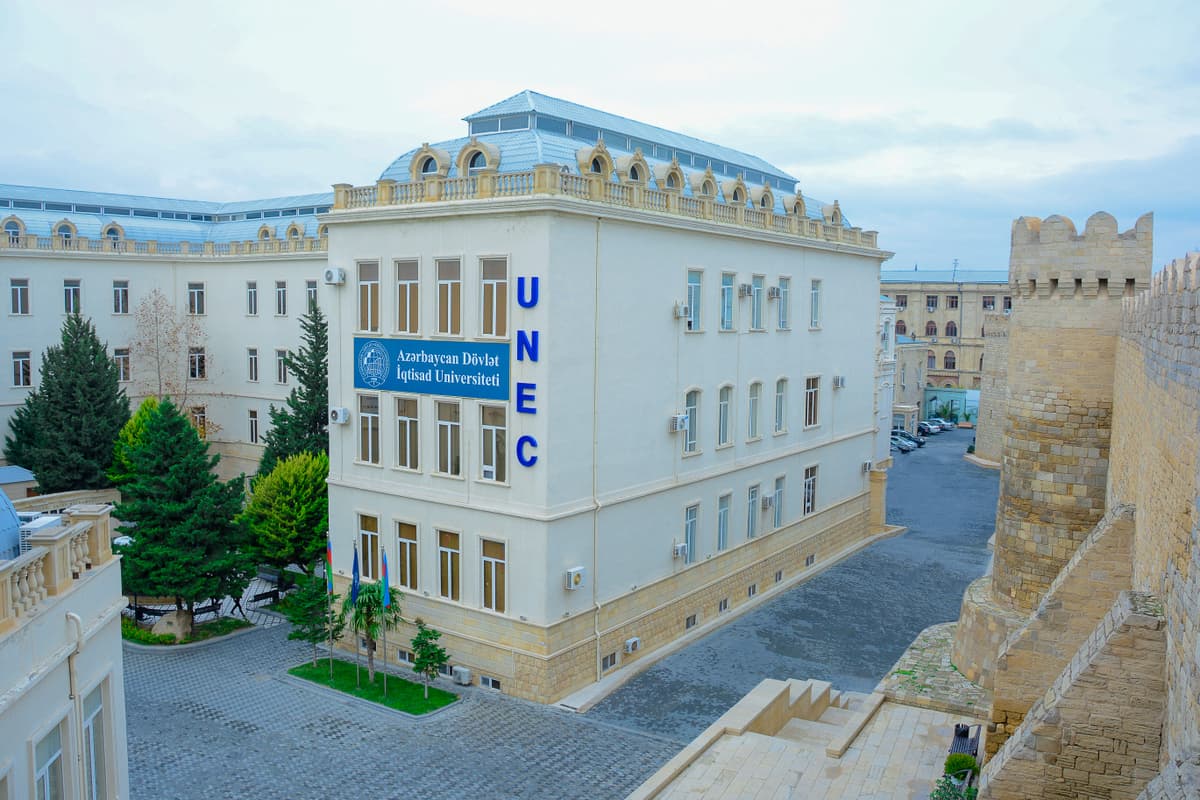
Azerbaijan State University of Economise Campus
Azerbaijan State University of Economise LogoVerified

Azerbaijan State University of Economise

🇦🇿

Azerbaijan

Overview

The Azerbaijan State University of Economics, officially branded as UNEC, serves as the primary epicenter for economic education, research, and innovation in the South Caucasus region. Founded in 1930, the institution has evolved from a specialized Soviet training institute into a modern, multi-disciplinary research university that effectively bridges the gap between traditional academic theory and the pragmatic requirements of the global market economy. As the only university in Azerbaijan solely dedicated to economics and business profiles, zerbaijan State University of Economics plays a pivotal role in shaping the human capital necessary for the nation’s ongoing transition towards a diversified, knowledge-based economy.

The institutional mission is deeply rooted in the principles of academic freedom, ethical responsibility, and international integration. zerbaijan State University of Economics aims to provide high-quality education that meets the standards of the European and American educational systems, facilitating the preparation of specialists who are not only technically proficient but also socially conscious and globally mobile. This mission is underscored by a core set of values that include transparency, excellence, quality, and the democratization of management through active stakeholder participation. By the year 2010, the university had successfully aligned its educational processes with the Bologna Process, ensuring full compliance with international accreditation standards and fostering a more active participation in the international market of educational services.

Strategic Vision: UNEC-100 and Digital Transformation

Strategic development at Azerbaijan State University of Economics is currently guided by the "UNEC-100" strategy, which envisions the institution’s transformation into a world-class research university by the centenary of its establishment. This vision is supported by a comprehensive digital transformation—the "Digital UNEC" model—which has revolutionized administrative efficiency and pedagogical delivery through the implementation of the EDUMAN system, hybrid classrooms, and a paperless electronic document management environment.

Historical Evolution and Architectural Heritage

The history of UNEC is a reflection of the tumultuous yet resilient development of Azerbaijan throughout the 20th and 21st centuries. The university was officially established on June 19, 1930, based on the Economics section of Baku State University. Initially named the Trade-Cooperative Institute, the school underwent a series of reorganizations and name changes that mirrored the evolving priorities of the Soviet educational system.

In 1933, the institution was reorganized as the Azerbaijan Social-Economic Institute, consolidating smaller institutes specializing in finance, socialist accounting, and Soviet law. During World War II, the institution was temporarily folded back into the Economics Department of Baku State University before being re-established as the Azerbaijan National Economic Institute in 1944. For a brief period in the 1980s, it functioned as the Baku Branch of the Leningrad Institute of Finance and Economics, eventually regaining its independent status in 1990 by decree of the Council of Ministers of the USSR. The modern institutional identity was finalized on June 13, 2000, when a presidential decree merged the Azerbaijan State Economic Institute and the Baku Institute of Commodity Studies to form the current Azerbaijan State University of Economics.

Architectural Landmark: The Main Academic Building

The architectural landscape of Azerbaijan State University of Economics is equally significant, particularly the Main Academic Building located at 6 Istiglaliyyat Street in the Sabail District. This historic monument, constructed between 1901 and 1904 by the philanthropist Musa Naghiyev, was designed by architect D. D. Buyanov in a monumental Italian administrative style. Originally housing the "First Real School," the building is regarded as an architectural gem of Baku’s urban ensemble. Today, this four-storey complex serves as the university's administrative nerve center and the home of the International School of Economics.

Timeline of Institutional Development

Historical PeriodInstitutional Name/StatusKey Milestones
1930 – 1933Trade-Cooperative InstituteFoundation as a separate entity from Baku State University.
1933 – 1941Azerbaijan Social-Economic InstituteConsolidation of finance and planning institutes.
1941 – 1944BSU Department of EconomicsIntegration during the onset of World War II.
1944 – 1959Azerbaijan National Economic InstituteRe-establishment of independent status.
1990 – 2000Azerbaijan State Institute of EconomicsTransition following the Leningrad Institute affiliation.
2000 – PresentAzerbaijan State University of EconomicsModern formation via presidential decree.

Academic Architecture: Faculties and Specialized Schools

The academic structure of Azerbaijan State University of Economics is designed to provide exhaustive coverage of the economic and business landscape, supplemented by emerging fields in technology, engineering, and design. The university operates through 14 specialized faculties and schools, each maintaining distinct curricula aligned with global industry requirements.

Core Economic and Business Faculties

The Faculty of Economics and Management remains the primary academic pillar, focusing on macro and microeconomic theory, international relations, and public administration. This faculty was modernized in 2022 to emphasize the transition to free-market relations and the preparation of specialists for the international arena. Similarly, the Faculty of Business and Management, established on the foundation of the historical Commerce faculty (dating back to 1930), provides specialized training in marketing, logistics, and business administration. These programs are characterized by high admission standards, with passing scores consistently rising as demand for these specialties increases in the Azerbaijani labor market.

International and Language-Specific Schools

A defining feature of Azerbaijan State University of Economics is its commitment to multilingual education, offering instruction in Azerbaijani, English, Russian, and Turkish. The International School of Economics (ISE) serves as the flagship for English-medium instruction, maintaining rigorous admission criteria and producing graduates who frequently pursue further studies at top-tier global institutions like the London School of Economics and Edinburgh University. The Russian School of Economics and the Turkic World Economics Faculty further extend this reach, catering to students from across the CIS and the Turkic-speaking world.

Emerging Disciplines: Engineering and Digital Economics

Reflecting the global trend towards digitalization, Azerbaijan State University of Economics has established the Faculty of Digital Economics and the Faculty of Engineering. These faculties bridge the gap between economic science and technological application. Programs in Information Security, IT, and Computer Engineering prepare students for the fourth industrial revolution, while the Faculty of Engineering offers specialized tracks in food engineering, communication systems, and mechanical engineering.

Summary of Academic Faculties

Faculty NameKey SpecializationsLanguage of Instruction
Economics and ManagementWorld Economy, Public Administration, International RelationsAzerbaijani, Turkish.
Business and ManagementMarketing, Management, Logistics, International TradeAzerbaijani, Turkish.
Finance and AccountingFinance, Accounting, AuditingAzerbaijani, English, Russian.
International School of EconomicsEconomics, Finance, Accounting, Business AdministrationEnglish.
Digital EconomicsIT, Information Security, Computer ScienceAzerbaijani, Russian.
EngineeringFood Engineering, Mechanical Engineering, Electrical EngineeringAzerbaijani, English.
UNEC Design SchoolDesign (various specializations)Azerbaijani.

International Recognition, Rankings, and Career Outcomes

UNEC’s strategic efforts toward internationalization have resulted in significant recognition from major global ranking agencies. As of 2026, the university holds the top position in Azerbaijan across multiple metrics, including the Times Higher Education (THE) World University Rankings and the QS Sustainability Rankings.

Performance in Global Rankings (2026 Data)

In the QS World University Rankings 2026, UNEC is positioned in the 801-850 band globally, making it a leader in the South Caucasus. Notably, in the QS Sustainability 2026 rankings, the university achieved the first rank in Azerbaijan across all three dimensions: Environmental Impact, Social Impact, and Governance. This performance is further validated by the THE World University Rankings, where Azerbaijan State University of Economics entered the 801-1000 tier and achieved an impressive 481st place globally for research quality.

Ranking AgencyIndicatorGlobal/Regional RankNational Rank
QS World University Rankings 2026Overall Performance801 – 8501st
Times Higher Education 2026Overall Performance801 – 10001st
Times Higher Education 2026Research Quality4811st
QS International Trade MBA 2026Program Strength561st
QS MBA Rankings 2026Overall MBA201 – 2501st
QS Sustainability 2026Environmental Impact5631st

Graduate Employability and Industry Links

The efficacy of Azerbaijan State University of Economics academic programs is directly reflected in the career outcomes of its alumni. Monitoring data from the International School of Economics indicates that 85 percent of graduates are hired immediately upon completion of their degrees, with a significant portion enrolling in graduate programs at prestigious international universities. The university maintains a robust partnership network with over 2,000 distinguished alumni employed across public and private sectors in Azerbaijan and abroad.

UNEC’s Career Center, founded in 2008 in collaboration with the International Labor Organization, serves as a vital bridge between students and the workforce. The center organizes annual "Employability Weeks" and career fairs, attracting leading employers such as the Pasha Group, SOCAR, and various government agencies. These partnerships facilitate internships and job placements, ensuring that curricula remain aligned with current labor market demands. Furthermore, programs in Finance and Accounting hold prestigious international accreditations from the CFA and ACCA, providing graduates with competitive advantages in global financial markets.

Research, Innovation, and Specialized Facilities

The transition toward becoming a research-oriented university is a core objective of the Azerbaijan State University of Economics development strategy. The university has established more than 40 specialized research centers and laboratories to foster scientific discovery and innovative business solutions.

Scientific Research Clusters

The research ecosystem at Azerbaijan State University of Economics is vast, covering themes from cognitive economics to food safety. The Scientific-Research Institute of Economic Studies coordinates these activities, ensuring that academic output contributes to national socio-economic goals. A unique "Differential Salary System" has been implemented for faculty, where salaries can increase by up to 100% based on research output and the number of citations in high-impact databases like Scopus.

Key Research Clusters include:

  • Technological Innovation: Applied Artificial Intelligence Research Center, Digital Economy Research Center, and the Materials Design and Advanced Computing Technologies Research Center.

  • Social and Sustainable Development: Center for Research on Climate Change, Sustainable Development and Green Economy Research Center, and the Multiculturalism Research Center.

  • Economic Analysis: Monetary Economics and Financial Technologies Research Center, Islamic Economics and Finance Research Center, and the Center for Small and Medium Business Research.

Specialized Laboratories

  1. Aziz Sancar Food Safety Laboratory: Inaugurated in 2021 with the support of BP, named after Nobel Laureate Professor Aziz Sancar. It is equipped with modern technologies to conduct chemical, physical, and microbiological analyses of food products. It serves as a hub for both scientific research and expertise.

  2. Bloomberg Financial Laboratory: To provide students with a real-world financial environment, Azerbaijan State University of Economics operates the Bloomberg Financial Laboratory. This facility allows students to participate in training sessions using global financial market data, providing hands-on experience in market analysis.

The "Digital UNEC" Model: Modernizing Campus Life

Azerbaijan State University of Economics has pioneered the digitalization of higher education in Azerbaijan through the "Digital UNEC" model. This initiative aims to create a "One-Stop Service" environment where all administrative and academic processes are handled electronically.

EDUMAN and Administrative Efficiency

The EDUMAN system centralizes the university's core academic information, allowing for real-time tracking of class schedules, group formation, and student progress. Since 2015, the Electronic Document Management System has transitioned the institution away from paper-based clerical work. This digital shift extends to students through "Personal Cabinets," where they can access grades, attendance records, and request official documents verified with QR codes in PDF format.

Hybrid and Interactive Pedagogy

Innovation is also evident in the physical classroom environment. Azerbaijan State University of Economics has introduced approximately 100 hybrid classrooms, which allow for simultaneous traditional and online learning formats. These spaces are designed to increase the flexibility and accessibility of education. The university's 24/7 electronic library further supports this digital ecosystem, providing students with constant access to scholarly databases and digital archives.

Admission Standards and the International Student Experience

Azerbaijan State University of Economics has established itself as an attractive destination for international students due to its affordable tuition, high academic standards, and diverse cultural environment. Currently, the university hosts more than 450 international students from over 12 countries.

Admission Procedure for Foreign Nationals

The admission process for international applicants is conducted entirely online through the "Study in Azerbaijan" (SIACAS) platform (portal.edu.az). Candidates must submit a suite of documents, including:

  • A high school or university diploma (apostilled transcript).

  • A valid passport and CV.

  • A medical certificate.

  • For English-taught programs, proof of language proficiency (IELTS or TOEFL) is required, while programs in Russian or Turkish require relevant proof of competency.

Support Services and Cultural Integration

The International Student Support Center (ISSC) at Azerbaijan State University of Economics provides comprehensive guidance on visas, residency permits, and cultural integration. Orientation programs help new students adjust to life in Baku. Student testimonials highlight the effectiveness of these services, praising the university's efforts to organize cultural exchange events and "International Weeks".

Degree Levels and Requirements

Degree LevelTypical DurationKey Requirements
Bachelor’s4 – 5 YearsSecondary school certificate, language proficiency.
Master’s1.5 – 2 YearsBachelor’s degree in a relevant field, recommendation letters.
Doctoral (PhD)3 YearsMaster’s diploma, research proposal, nostrification of prior degrees.

Monthly Living Cost Breakdown (USD)

Expense CategoryShared Housing (USD)Private Housing (USD)
Accommodation$150 – $250$300 – $600
Food & Groceries$100 – $150$150 – $250
Public Transportation$10 – $15$15 – $25
Utilities & Internet$30 – $40$50 – $80
Mobile Plan$5 – $10$10 – $25
Leisure & Misc.$30 – $60$80 – $150

Tuition Fees for International Students:

Tuition at Azerbaijan State University of Economics is competitively priced, typically ranging between $1,000 and $3,000 per year for bachelor's and master's programs, depending on the language of instruction and the specific faculty. Engineering and IT programs remain highly accessible compared to European alternatives.

Accommodation Options

  • Private Apartments and Shared Housing: The majority of international students opt for shared apartments in the Yasamal, Sabail, or Narimanov districts. A private one-bedroom apartment in the city center typically rents for 400 to 800 AZN per month. Sharing a flat can reduce individual costs to approximately $150-$250 per month.

Student Lifestyle, Culture, and Social Integration

Baku is a city where East meets West, offering students a vibrant social and cultural life. The university experience at Azerbaijan State University of Economics extends far beyond the lecture hall.

Campus Atmosphere and Social Hubs

The Azerbaijan State University of Economics campus atmosphere is described as professional yet welcoming. The main building on Istiglaliyyat Street is surrounded by historic landmarks like the Old City (Icherisheher) and modern attractions like Fountain Square. Popular student cafes such as "United Coffee Beans" and "Coffee Moffie" offer quiet spaces for study and social interaction.

Student Organizations and Events

Active engagement is facilitated through the Student Youth Organization (SYO) and the Student Trade Union Committee. These groups organize intellectual competitions and "International Weeks". The "Cross Cultural Club" specifically focuses on integrating international students into the local community through events and language exchanges.

Sports and Fitness Opportunities

  • On-Campus Facilities: The university features an indoor sports court used for futsal, volleyball, and basketball.

  • Fitness and Wellness: A modern fitness center is available, equipped with cardio and strength training machines. Additionally, the university hosts an indoor swimming pool and specialized areas for wrestling.

Library Resources and Research Support

The Azerbaijan State University of Economics Library Information Center is a cornerstone of the university's academic infrastructure, having operated since 1930.

Physical and Digital Collections

The library fund includes over 267,000 physical copies in Azerbaijani, Russian, Turkish, and English. The flagship facility is the 24/7 library, a three-storey building located at the main campus that provides a specialized environment for round-the-clock study. Digitally, students have access to nearly 5 million materials through international databases such as EBSCO, ProQuest Central, and JSTOR.

Research Support Services

The library offers specialized services such as "Ask the Librarian," electronic catalogs, and high-speed book scanners. For advanced researchers, it provides access to artificial intelligence tools like the "ProQuest Research Assistant".

Campus Details and Logistics

UNEC operates multiple academic buildings and branches in Baku:

  1. Main Building (No. 1): 6 Istiglaliyyat Street. Houses the administration, ISE, and the 24/7 library.

  2. Building No. 2: 135 Hasan Aliyev Street. Located in the Narimanov District, including academic buildings and a sports hall.

  3. Building No. 3: 194 Murtuza Muxtarov Street. A modern facility for technical and technological specialties.

  4. Building No. 4: 45a Abbas Sahhat Street. Houses administrative units, lecture halls, and various laboratories.

Accessibility: All UNEC buildings are highly accessible via public transport. The metro stations "Icherisheher" and "28 May" serve as primary transit hubs.

Featured Programs

No Courses Found

No Courses Available

Highlight

Baku offers a unique blend of high quality of life and cost-effectiveness. The estimated monthly budget for an international student ranges from $400 to $800, depending on lifestyle and housing choices.

Campus

Main campus

Baku

The university's main building is located in the old city of Baku.

Second Campus

Baku

Murtuza Muxtarov Street. A modern facility for technical and technological specialties.

Third Campus

Baku

Abbas Sahhat Street. Houses administrative units, lecture halls, and various laboratories.

FAQ

UNEC is a multilingual institution offering programs in Azerbaijani, English, Russian, and Turkish.
Yes, UNEC is the top-ranked university in Azerbaijan according to QS and Times Higher Education (THE) for 2026.
A typical monthly budget ranges from $400 to $800, including housing, food, and transport.
Baku is considered a very safe city for students, with low crime rates and a welcoming cultural environment.

Our Study Abroad FAQ covers everything you need to know—from choosing the right destination and applying to universities, to visa requirements.

$1,470 - $1530

International Student tutition fee

Not Available

Scholarship Available

Sep 2026

Start Month

Sep 2026

Application Deadline

Full-time

Mode Of Study

Discount

Not Available

Edubrink

Stay updated on all things Edubrink by subscribing to us!

By subscribing you agree with our Privacy Policy and provide consent to receive updates.

Universities

    Countries

      Courses

        Social Media

        • Facebook
        • Twitter
        • Instagram

        Pages

        • University
        • Courses
        • Destination

        Copyright reserved@ 2023

        Edubrink @ 2024